
Grateful
Making meaning of this day

Happy Holiday to you, friend!
However you are spending this day: cooking, eating, reflecting, playing, grieving, walking, praying, watching movies, screaming at football games, remembering your ancestors, deconstructing myths of “pilgrims and Indians,” rolling around in the leaves, jumping through waves, taking a nap, reading a book, playing with kids, winning Big Whist tournaments—I hope you are making time for gratitude.
I just did some reading on the origin story of Thanksgiving. I’m borrowing here from How to Tell the Thanksgiving Story on Its 400th Anniversary by David Kindy, published in the Smithsonian Magazine on November 23, 2021.
“If not for a few lines written by English colonist Edward Winslow, the uniquely American holiday of Thanksgiving might never have made it to the dining room table. A celebration of family, food and football, the tradition of a festive, harvest-time meal evolved from a letter penned by the esteemed settler about an obscure event held in the fall of 1621 at Plymouth Colony in what is now Massachusetts:
Our harvest being gotten in, our governor sent four men on fowling, that so we might after have a special manner rejoice together, after we had gathered the fruits of our labors; they four in one day killed as much fowl, as with a little help beside, served the Company almost a week, at which time amongst other Recreations, we exercised our Arms, many of the Indians coming amongst us, and amongst the rest their greatest king Massasoit, with some ninety men, whom for three days we entertained and feasted, and they went out and killed five Deer, which they brought to the Plantation and bestowed on our Governor, and upon the Captain and others.”
Most historians now agree that in 1620, a small group of English separatists, who called themselves Saints (they become Pilgrims later) came to these shores in search of religious freedom. Though they were headed to what is now Delaware, December winds blew them to Plymouth. They would encounter the Wampanoag the following spring.
Kindy goes on to write,
“In April 1621, both groups had signed a treaty pledging to come to the aid of the other in case of attack. Each group was vulnerable; the colonizers were sick and lost nearly half their number to death from their first winter in a new land. Between 1616 and 1619, diseases introduced by European colonizers killed up to 90 percent of the Wampanoag population in an epidemic now referred to as the Great Dying. Weakened, the tribe also needed help fending off incursions from the Narragansett, a rival Native group.
According to Donna Curtin, executive director of Pilgrim Hall, America’s oldest continuously operating museum, ‘These two groups very recently formed an alliance and are still getting acquainted with each other,’ she explains. ‘You have to look at this with diplomatic overtones. In today’s Thanksgiving tradition, most people really don’t look at that aspect of it. This was a way to cement this very fresh alliance between the English and ... the leader of the many tribal elements [Massasoit] represented.’”
Because it was held outdoors, Tom Begley, a historian at Plimoth Patuxet Museums, likens the gathering to a political potluck picnic. Communication was difficult, as only Tisquantum—remembered today as Squanto—and a few other Native American guests spoke English and could act as translators.
‘It was a diplomatic event between these two communities,’ he says. ‘Despite the language barrier, it’s still pretty interesting that they were gathering together for three days. We always talk about how the relationship between the Indigenous people and settlers changed over time, and this is one of the earliest examples of relationship building.’”
Even if this first gathering was festive, many Indigenous peoples observe Thanksgiving as a National Day of Mourning, an annual commemoration that began in 1970 because the Mayflower symbolizes the establishment of European colonizing, advancing and an abusive Christianity, genocide, displacement and servitude of the original humans on this land.
How can we make meaning of this National Day of Gratitude, set apart by President Abraham Lincoln on October 3, 1863? Secretary of State William H. Seward wrote the address Lincoln delivered calling for nation to …”solemnly, reverently and gratefully acknowledged as with one heart and one voice…” thanksgiving for singular blessings by God. In the proclamation, Lincoln commends to God’s tender care “…all those who have become widows, orphans, mourners or sufferers in the lamentable civil strife in which we are unavoidably engaged….” In no place in the proclamation are harms done to Indigenous people or to enslaved African people mentioned. When I read the proclamation, and I don’t see my people or the horror of their struggle mentioned, it makes me angry. It makes me sad.
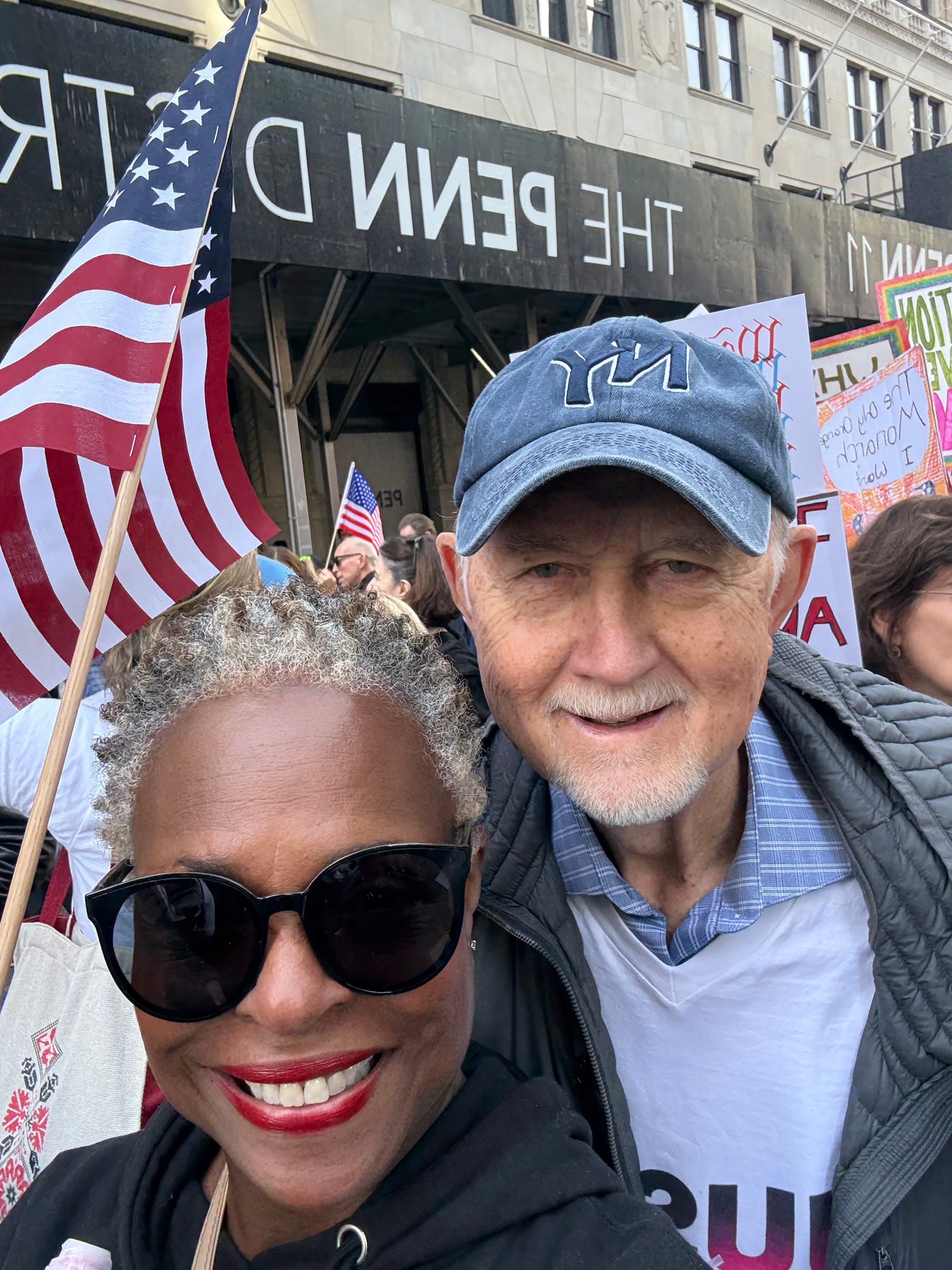
John and I are home alone today, a decision we made, to be still, think, reflect, rest, NOT SHOP (because We Ain’t Buying It!) and just bask in our blessings and love. We’ve called and texted our family and friends; we are baking and cooking because, that’s our tradition and that brings us joy. And to be clear: EVERY DAY we are so thankful for our life, for each other, for siblings and children and grandchildren. We are so thankful for Middle Church, a love machine that welcomes all the people. We are so grateful for health and belonging and laughter and the ability to weep when we are sad. Our friend Bob just died; our daughter-in-love just lost her dad. As we hold this grief with our people, we lean into the circle of life, and the ups and downs that come our way. We own our own grief of parents lost to age and disease, and the empty seats at our table.
We also grieve the state of the world. Cease fires broken. Lives discounted. Families broken apart by broken immigration policies. As I write, the government whose legacy is enslavement and genocide has captured one of our members, breaking up a family in this vulnerable time. Our community is heartbroken over this development, and are doing all we can to support our beloved—God’s beloved—who happen to be Brown and Queer.
Can we cook, bake pies, be grateful AND work to get the story straight? Can we unmask the myths of Plymouth and a pull the curtain back on a national call to thanksgiving issued in the midst of treating Black people like animals and genocide of the people native to this land?
Our nation will celebrate its 250th anniversary next year. New York is celebrating 400 years soon as well. There are some who say the gathering of the Europeans and the Indigenous was cause for thanksgiving back in 1621. I am not sure about that. BUT I’d like to think as we work to know more about history, and we listen to more points of view; as we who are people of moral courage and rule-breaking kindness make curiosity a spiritual practice, we will unearth true stories and write a new one—a better one—together.
So, I am grateful for liminal space, for both/and moments like this one. For questions and some answers. For inquiry and tenacious scholarship. I am thankful for ancestors whispering in the wind, “Let’s do better.”
Let’s.
P.S. Sunday is the first Sunday of Advent. Worship is going to be amazing at Middle Church. Come home, to love, at 11:45a in person and online at Middle Church You Tube.
Thank you Andrea. That's how we change the story.
I am 17th generations back descendant of the tribe that "saved" the stupid Pilgrims who never thought to actually plant the corn seeds the supposedly were eating as their last meal. They didn't know how to plant!
I'm a retired minister and every Sunday prior to Thanksgiving I would hand each parishoner 5 dried corn kernals and tell them to share that story with their family around the table. Whether true or not it's a lesson from the tribe who had their land stolen first.